Most bar takers don’t fail because they’re lazy.
They fail because they spend months doing work that feels responsible, but produces almost no usable recall on exam day.
I learned this the hard way.
A guy I knew from Harvard did everything “correct.” Religious Barbri schedule. Color-coded calendar. Zero skipped days. He still failed.
A woman I knew from Johns Hopkins carried her Critical Pass cards everywhere. Coffee line. Gym. Grocery store. She missed by a hair.
If that makes your stomach drop, good. It should. Because the scary part is not that they didn't do enough.
The scary part is that they did a lot, and most of it did not convert into points.
Here’s the part people do not want to hear, but need to. If you keep reading, you will see the exact pivot that took people like this from “how did I fail?” to “how did I ever study any other way?”
The bar exam is not a test of effort.
It is a test of strategy under constraint. Many of the students who pass comfortably are not studying more than you.
They are studying differently, and some of them are not “naturally smarter.” They are just running a cleaner system.

The part nobody tells you about “smart” bar takers
About six to eight weeks out, the strongest bar takers stop behaving like students and start behaving like tacticians.
They stop trying to “get through” the material, stop treating lectures like progress, and stop collecting resources like they’re stocking a bunker.
They start doing something that feels almost irresponsible at first. They get picky. Not in the “I’m overwhelmed” way. In the “I’m hunting points” way.
They start asking what rules show up again and again on the MBE, which distinctions are bait and which ones are score-makers, what they keep missing even after they “reviewed,” and what feels familiar but still collapses under time pressure.
Nobody talks about this shift in the class group chat. Nobody says, “Hey, I’m cutting half the material loose so I can score higher.”
They just do it. On exam day, they look calm, and that’s the tell. It means they stopped studying like everyone else, and started studying to win.
What top students at Harvard and Yale do that most bar takers never copy
Let’s talk about the students who treat the bar like a competitive event. They have access to every resource, every outline, every course, and every tutor.
But they do not try to learn everything, and they do not try to “cover the syllabus.” They also do not try to complete a checklist so they can feel safe.
They compress the universe into fundamentals. They spend a surprising amount of time asking what is the smallest set of rules they must be able to retrieve instantly, which high-yield exceptions actually show up, and what patterns keep repeating across questions.
If you are still trying to boil the ocean, there is a good chance you are competing against someone who is doing the opposite.
They are not studying more. They are studying with a plan that turns time into points. If you want to catch up, you have to stop trying to cover everything.
But there's one well-kept secret that a growing number of bar exam takers are finally figuring out.
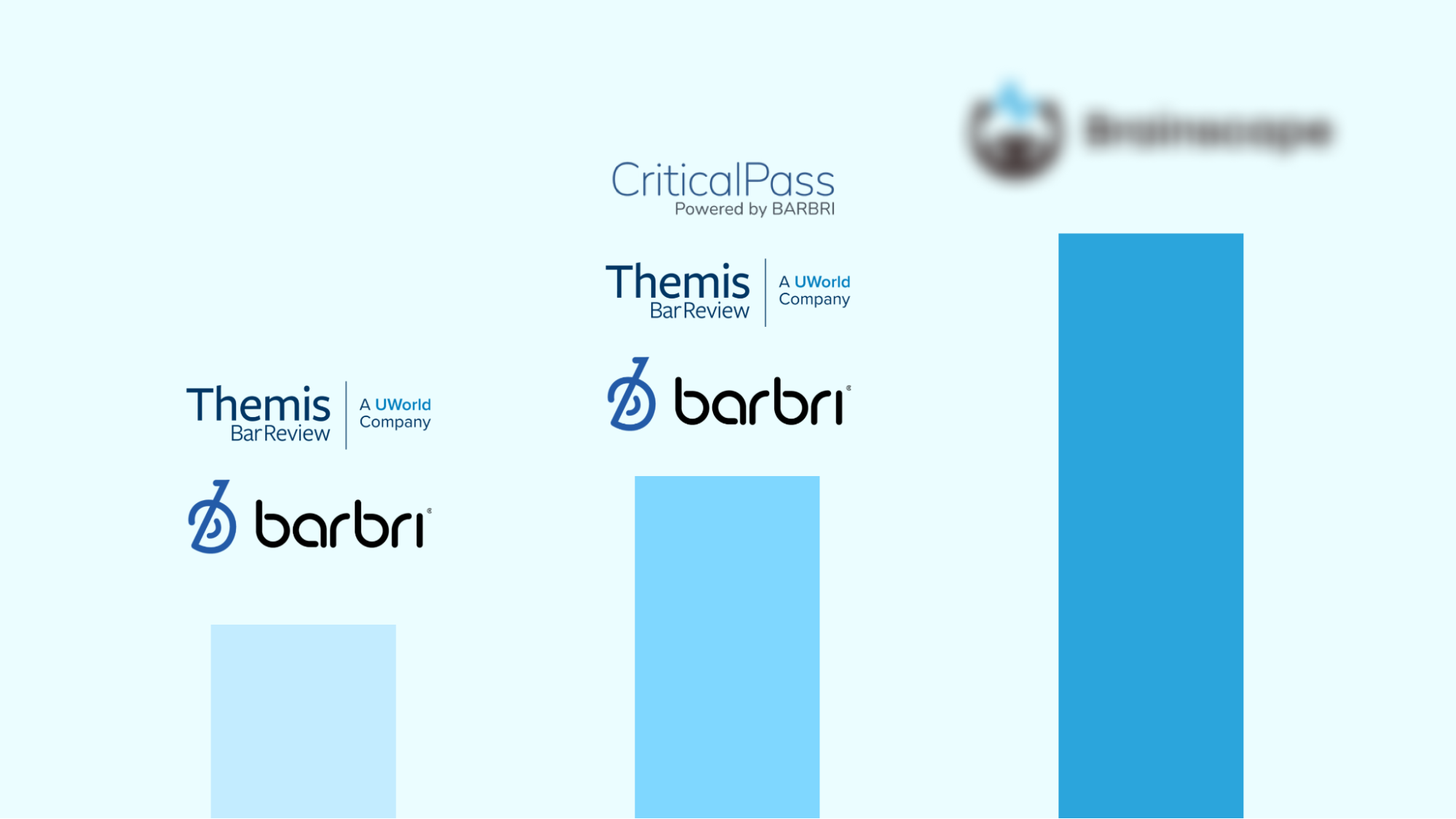
The first hidden failure mode: trying to boil the ocean
If you’re using a traditional bar course, this probably feels familiar:
You have outlines the size of small textbooks. You have lectures that never end. You have checklists that reward completion, not retention.
It creates the illusion of progress.
But in the final stretch, that illusion becomes dangerous.
Because the MBE does not reward exposure, passive review, or “I remember seeing this somewhere.” It rewards instant retrieval of the right rule from a massive pile of similar-sounding rules.
The hardest part of MBE prep is not learning new rules. It is deciding which rules are worth learning at all.
Commercial courses are built for coverage. They have to be. If they leave something out and you see it on exam day, they get blamed.
So they build a universe. And then they hand you the keys and act like the goal is to drive every street.
That is not your goal.
Your goal is to walk into the MBE with the fundamentals so locked in that you can spend your limited mental energy on the tricky parts.
The second hidden failure mode: forgetting what you already “learned”
Let’s assume you read the outline. Let’s assume you understood the lecture. Let’s assume you got the question right yesterday.
None of that matters if you can’t retrieve the rule today, under pressure.
This is where most bar prep breaks down completely.
Human memory decays fast. Faster than people expect. Especially under stress. Even more so when dealing with hundreds of similar concepts.
Most bar takers only notice this once it’s already happening.
They reread. They recognize. They feel reassured.
Then they miss the question again.
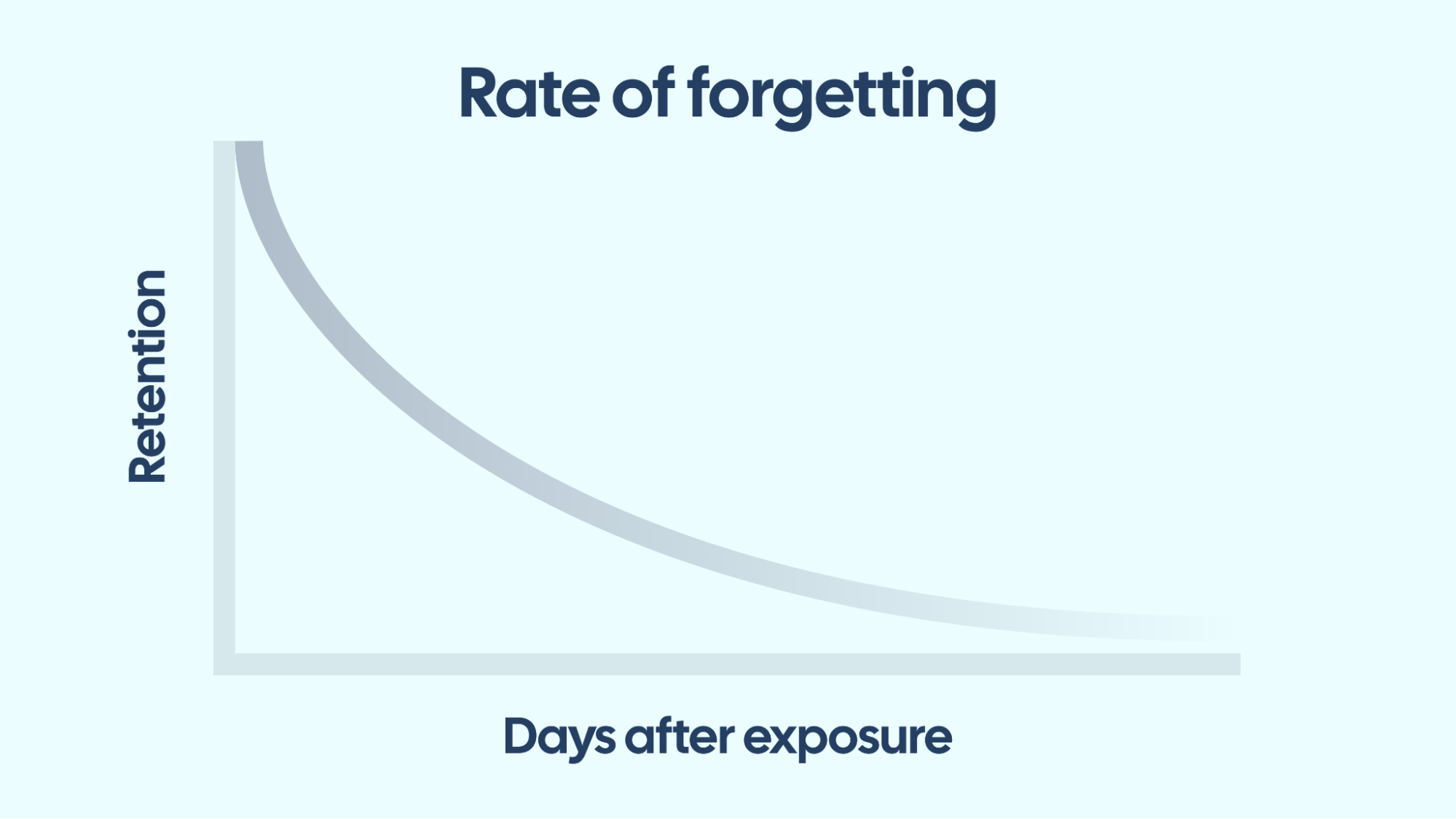
This is not a motivation problem.
It is what memory does by default.
Why “doing more questions” still isn’t enough
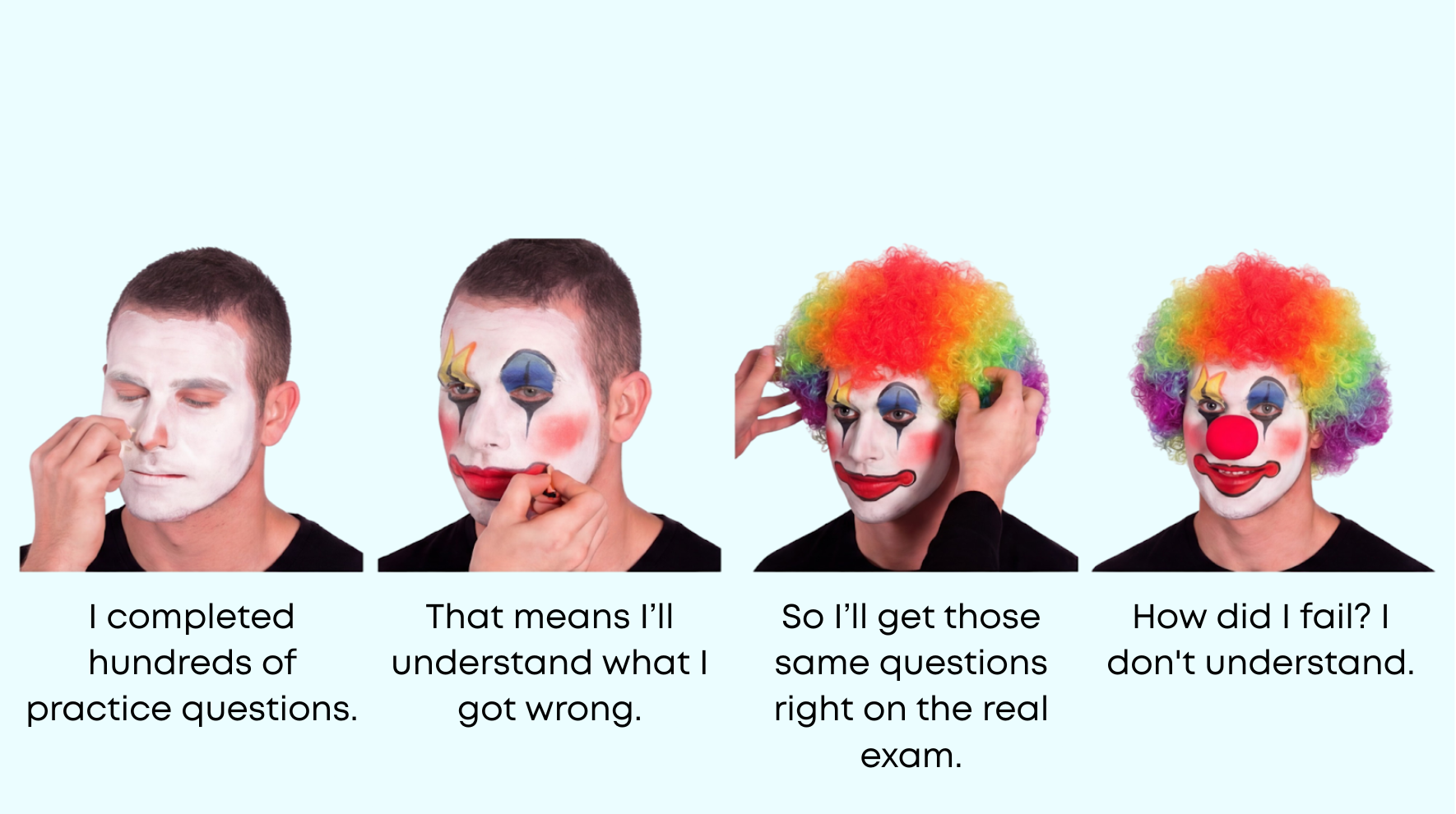
At this point, some students double down on practice questions.
That’s better than rereading outlines. But it still leaves a critical gap.
Most people:
Very few convert missed questions into durable, retrievable knowledge.
Recognition creeps in. Recall never fully forms.
That distinction is everything on the MBE.
If you want the solution, you need these two things
You need two things to fix this, and most bar prep stacks give you neither.
You need a distilled set of high-yield fundamentals that actually drive points.
And you need a system that keeps those rules retrievable through to the exam day.
Now we can talk about Brainscape.
This is where Brainscape comes in
By the time most students hear about Brainscape, they already have Barbri or Themis lectures, outlines, flashcards, and a question bank.
Good. Keep them. They help set the framework.
The problem is that your bar prep resources are useless until you solidify your memory of the underlying legal concepts. If you cannot recall the elements cleanly, the lectures blur together and the question banks turn into expensive guessing practice.
And "static" flashcards like Critical Pass or Quizlet do not fix that. They show you everything on the same schedule, no matter what you know or keep missing. You need high-yield flashcard content in an adaptive web and mobile system that optimizes how you study.
Brainscape is the missing piece that makes your last few weeks convert into points.

Brainscape’s MBE content was led by Stanford professor Brianne Holland-Stergar and top-scoring UCLA law alum Grace Bowden.
They took the universe of MBE-tested rules and distilled the top concepts you’d see across Barbri, Themis, and Critical Pass into a tight set of high-yield flashcards that are most likely to show up on the actual exam.
In the final weeks, you do not need more content. You need the right content, stripped down to its most testable form.
They cut low-yield detail and focus on the rules and distinctions that actually appear again and again. This is what turns limited time into points.
Brainscape fights forgetting
Once the content is distilled, the next problem is keeping it accessible.
Brainscape forces active retrieval of each rule, then schedules its return based on how confidently you answered. Struggle with it and it comes back sooner. Know it cold and it backs off.

Rate a card high and it gets out of your way. Rate it low and it comes back before you forget it.
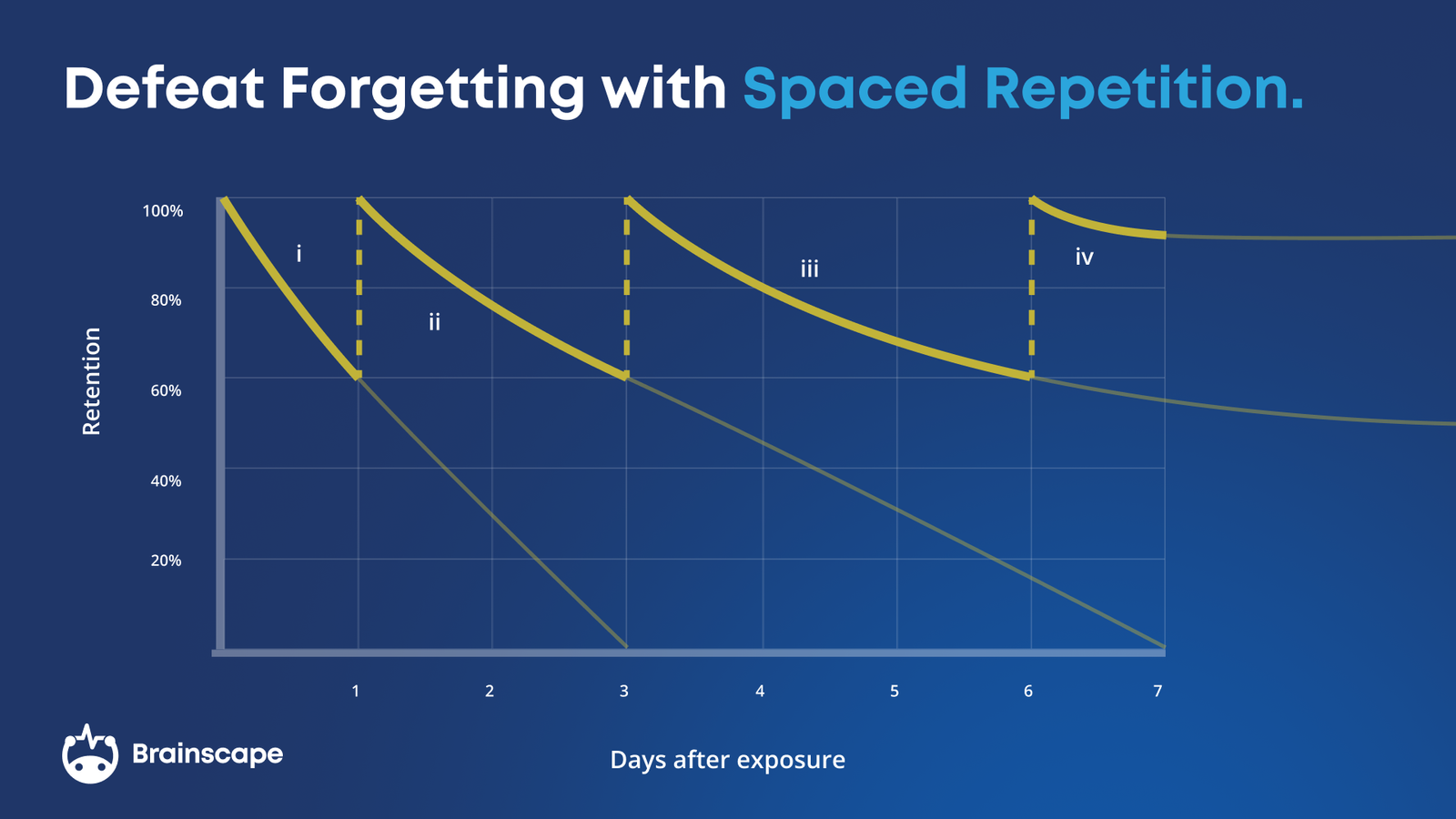
This keeps high-yield rules available without burning you out. It is not random review. It is a system that responds to what you actually know.
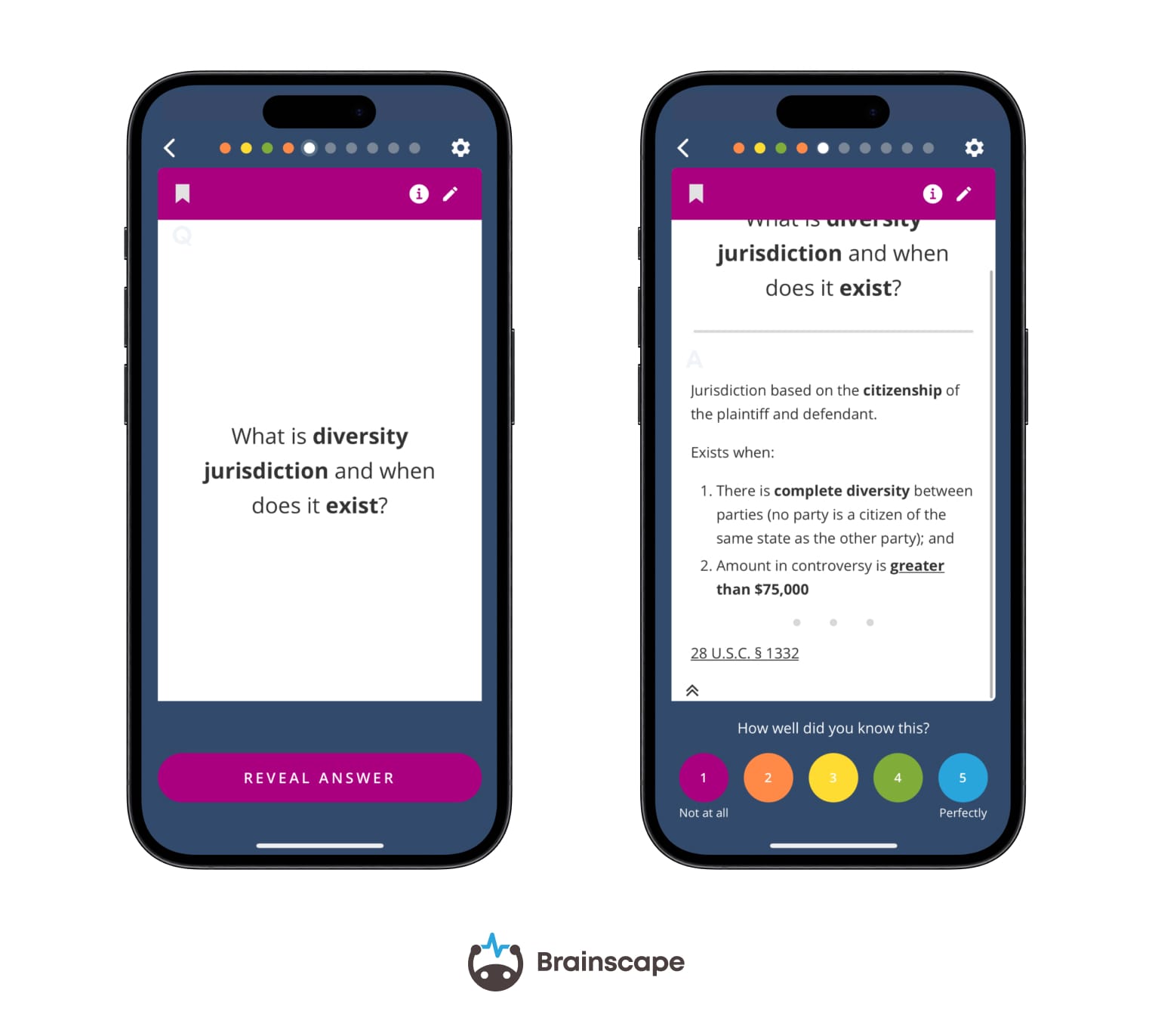
This is what you are drilling in the moment. Plain-language rules, tight fact patterns, and no fluff.
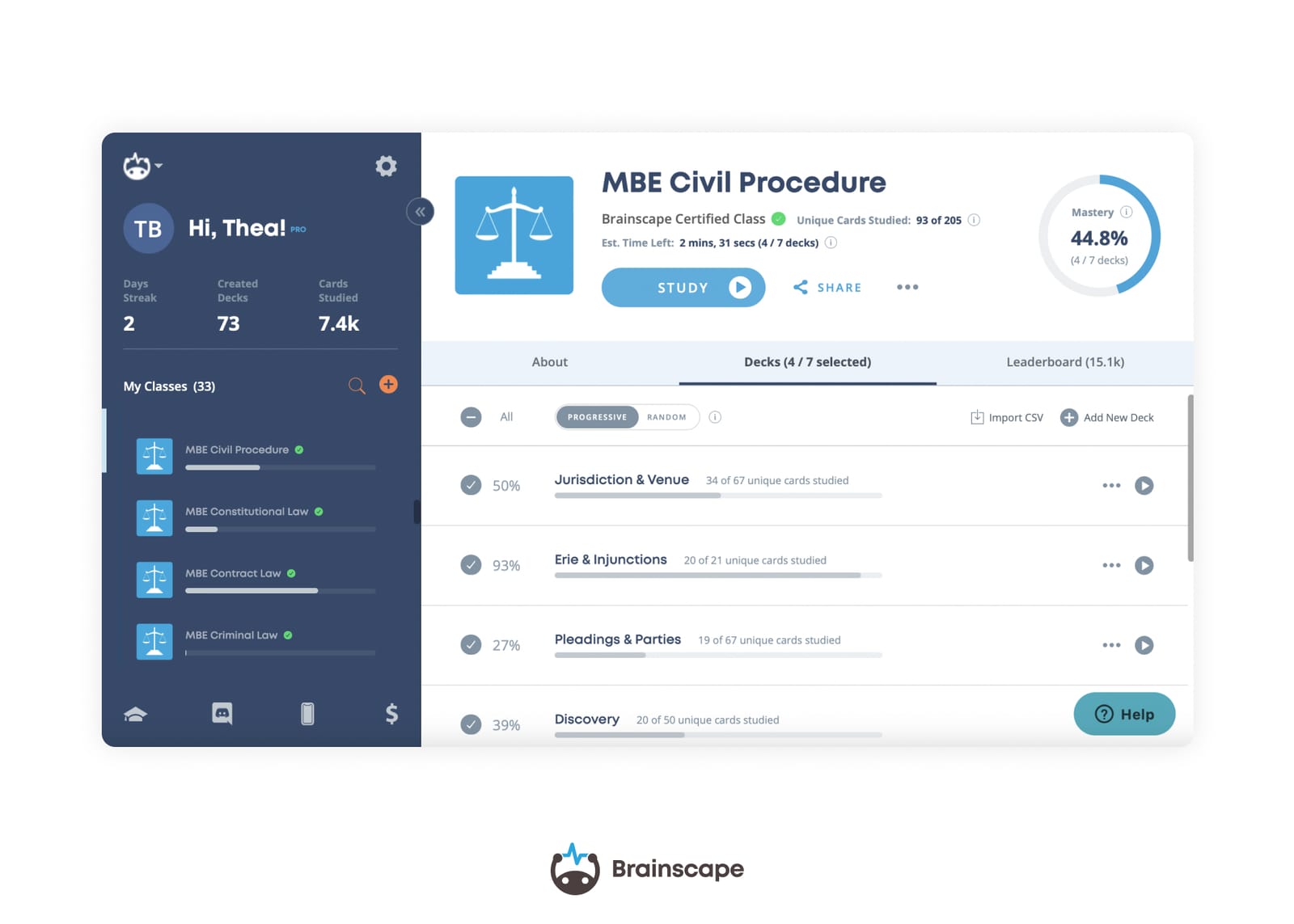
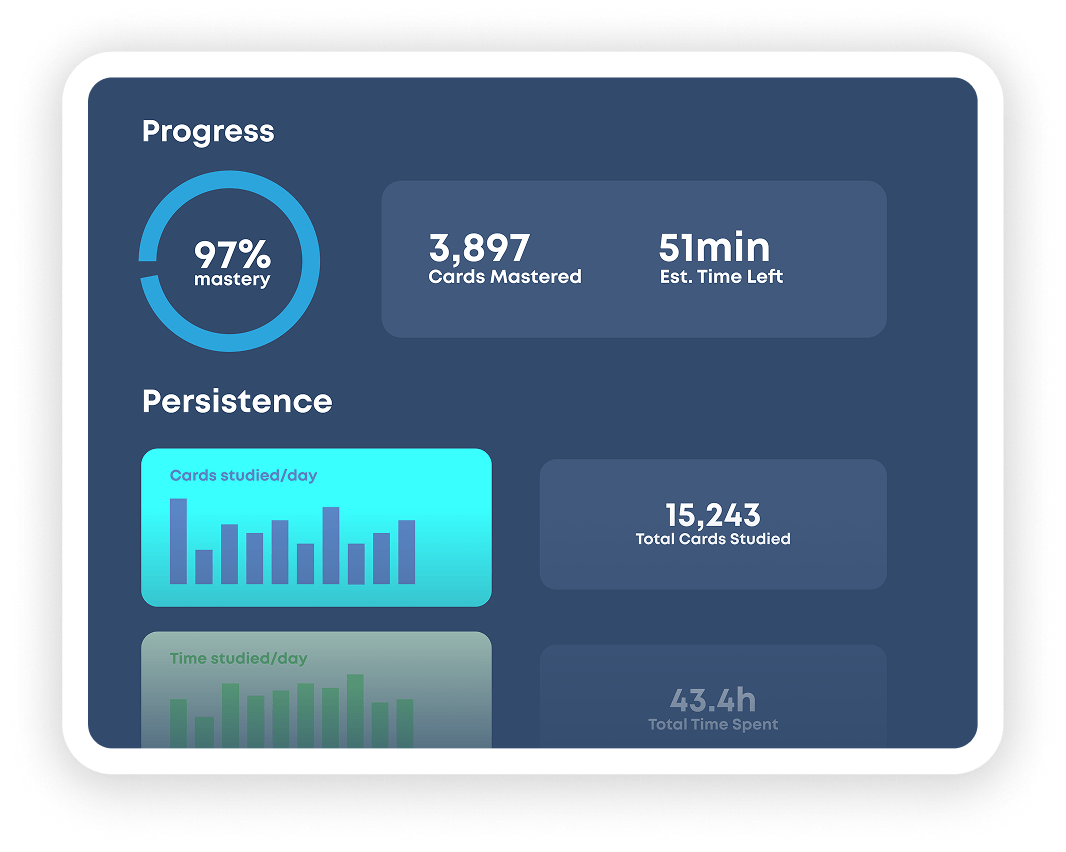
You also get clear feedback on what is improving, what is shaky, and what still needs reps.
Proof that real bar takers actually use this
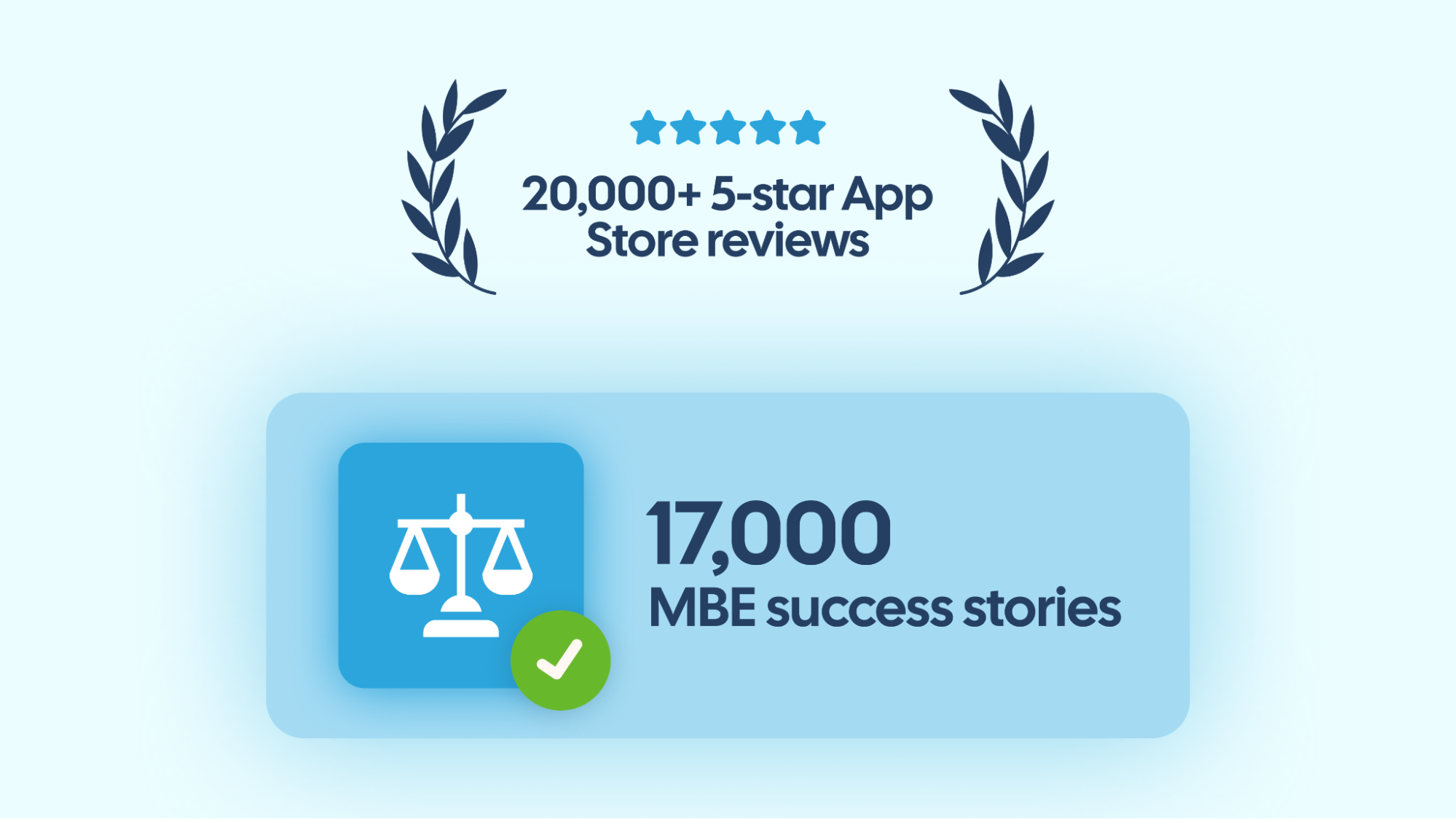
Over a decade, Brainscape has helped create 100,000+ MBE success stories. Brainscape also has 20,000+ 5-star App Store reviews.
If you want proof outside of marketing pages, look at what bar takers say in public.
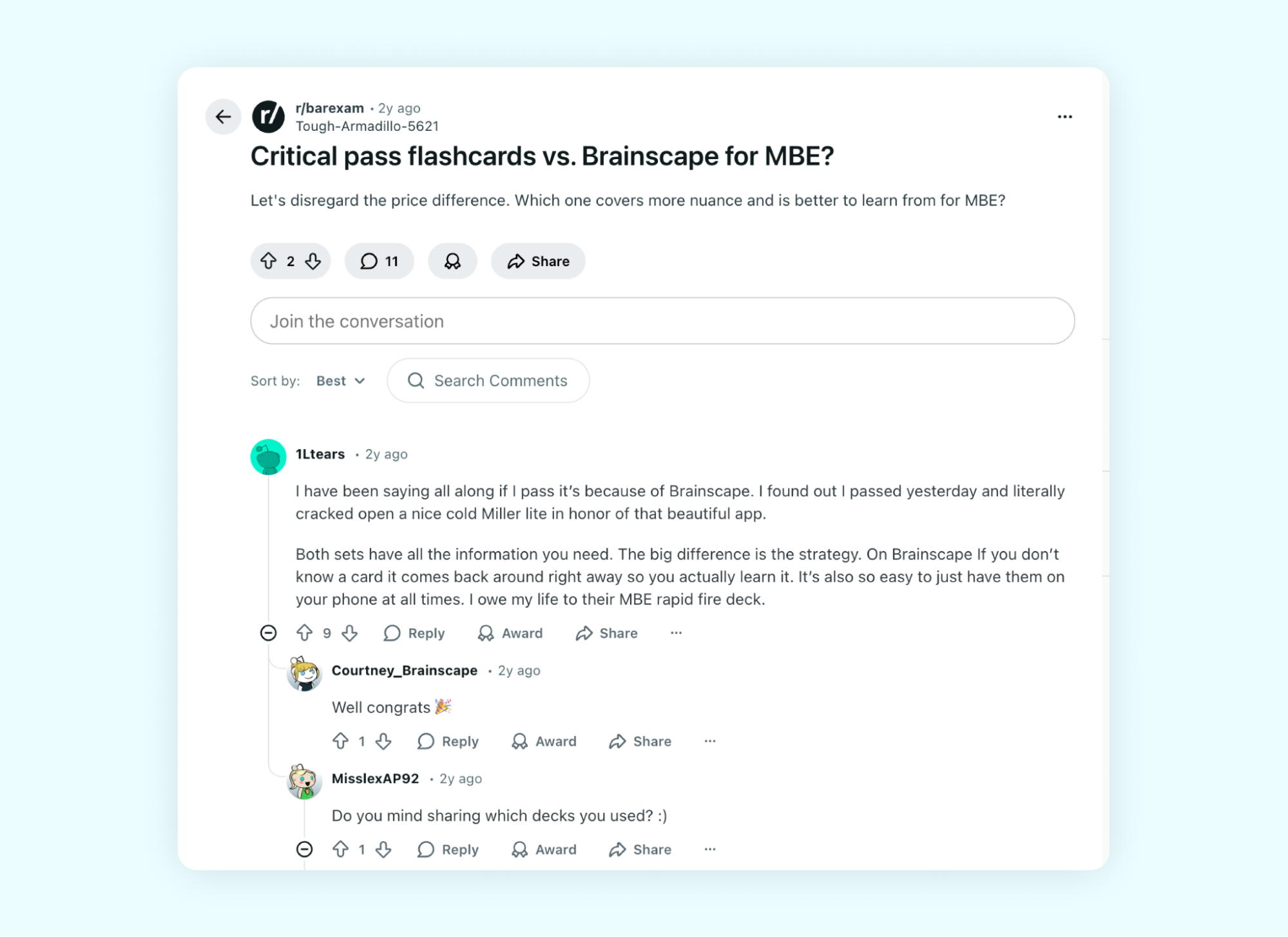
This is the kind of thing people post when they are tired and honest.
Full access to the MBE flashcards through the July bar exam
- One-time purchase: $96
- Immediate access via code after checkout
- Access code emailed instantly
- Works on web and mobile
A lot of bar prep tools make you work just to find what you paid for. This one doesn’t.

Price update notice
We are raising the price after this exam cycle. If you want the $96 access, get it today. Once the window closes, it closes.
If you already know what works, the only remaining question is whether you’re willing to use it.
© 2026 Brainscape. Terms and privacy policy apply.